
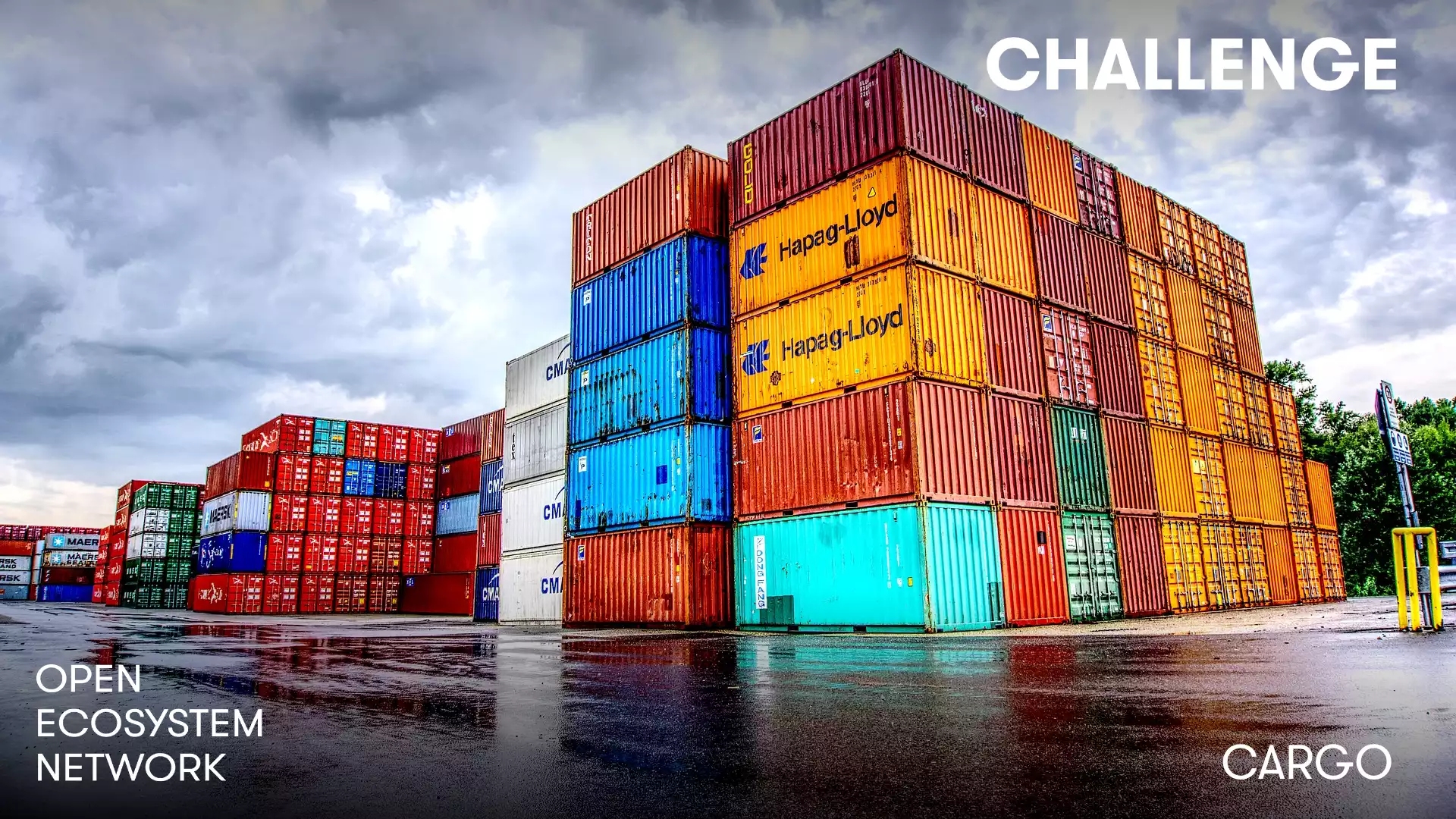
Intelligent supply chain management requires real time information of inventory and knowledge of the whereabouts of our goods during transit.
Many industries are facing the same problems: lack of transparency and delayed information during this process: goods are being damaged or stolen, delayed, exposed to harsh conditions and cool chains are interrupted.
Nokia wants to work with innovators who are offering digital and next generation solutions in this domain, improving significantly the end-to-end visibility of goods in transit.
Considering the lifetime of a product starts in a factory, from there it is shipped along with other products in bulk to a central warehouse where the incoming bulk shipment is unpacked, stored and eventually shipped to a customer or a local warehouse. From here, the shipment might be combined with additional material and then transported to an installation site.
Along this transport chain, multiple parties (Logistic Service Providers) are involved: ranging from large, globally acting corporations to small, local contractors which transport our goods on the “last mile” from a local warehouse to a customer site.
In this challenge, we want you to look in one or more of the following problem statements and share your ideas and concrete proposals with us. And end-to-end solution is preferred.
All proposed solutions shall be easy to integrate into logistic processes, require only little training need during deployment, be functional across the globe (e.g. can be applied in emerging markets as easy as anywhere else), be safe and certified for all kinds of transport methods (air, land, sea), may not cause shipment clearing delay at international borders and must be environmentally sustainable.
The challenges that companies are facing:
1. Visibility of inbound and outbound shipment in-between central locations (factories, central warehouses, local warehouses)
We are looking for solutions and partners that are able to provide information about the goods in transit, such as: environmental conditions, location, transportation routes, events such as excessive shock or tilt, stop-overs, re-loading or co-loading events, shipment tampering, transit time.
This information should be available in real time or delayed. The information should be collected at reasonable intervals and provided in a standard electronic format.
The solution should provide proactive alerts about deviations from the service level agreement (SLA), and smart report functionalities, e.g. for a statistical analysis later in the process.
2. Visibility of shipments on the “last mile” from a warehouse to a customer location
The same challenges as previous. In addition, real-time information about the location of the shipment is mandatory. The solution should allow for a reliable prediction of delivery time (accuracy within 30-60min) and an easy way of sharing the shipment status, current location and ETA with customers or installation teams waiting at the destination.
Reliable and binding milestone status tracking (e.g. “shipment delivered”).
Realtime and daily reports for project managers who dispatch service personnel in the field. Proactive alerts about deviations from the SLA.
Desired granularity of information: every single box that is part of the shipment.
The key is to ensure the solution is flexible to adapt to capabilities of the partners across the globe. In developed regions, the partners tend to be mature with latest technologies and great infrastructure. Where as in other regions there are new entrants or “local heroes” with very basic capabilities who work in this space. It is imperative that the solution is flexible and adaptable in this regard.
3. Payment and processing automation
Along the transportation chain, many parties with different roles are involved:
LSPs or 3PLs for transportation, that might deliver the shipment within the agreed SLA, lose or damage the goods in transit or exceed the SLA.
We are looking for ideas or concrete solutions which allows reliable detection and recording of such events and can automatically trigger actions like LSP payments, insurance claims, Goods Received (GR) bookings, inventory system updates.
4. Customers, who receives shipments
We are looking for ideas or concrete solutions, using latest technologies as blockchain (Smart Contracts), which allows for automated Goods Receipts (GR) bookings and invoicing solutions.
The goal is to relieve the recipient of the shipment of the manual efforts to acknowledge the shipment and to automate and speed up the invoicing processes on our side.
Join the challenge and submit your ideas and solutions!