


From Swathi Venuturupalli, Program Manager - Circular Economy & Sustainability, The Nordic Frugal Innovation Society; Venkata Gandikota, Founder - The Nordic Frugal Innovation Society
What is Frugal Innovation?
Carlos Ghosn, Chairman and CEO of the Renault-Nissan Alliance, coined the term “frugal engineering” in 2006. He was impressed by Indian engineers’ ability to cost-effectively and quickly innovate under severe resource constraints.
Frugal Innovation is a concept that urges businesses to respond to limitations in resources; whether financial, material or institutional, and turn these constraints into innovative ideas and practical solutions.
For example:A product or service that results from Frugal Innovation principles should be priced at a 50-70% lower cost than the current alternative and should have at least 70-80% of the functionality, while not compromising on quality.

In simple words, Frugal Innovations can be created using the above processes like Circular & Sharing Economies, Open Innovation, Maker Movement and Inclusive Business.
To really benefit from frugal innovations, we need to emphasize good quality solutions that are accessible and affordable created with:
- design thinking at the product/service level,
- systems thinking at the macro level,
- new ways of product design & development,
- leveraging modern technologies to deliver low cost solution
- innovative business models to make solutions accessible (e.g.: Product as a service etc.)
Why do we need Frugal Innovations?
The UK Innovation organization, NESTA, gives a great summary of why we need Frugal Innovation in UK and Europe:
- Lackluster growth and cutting funds to reduce debt in developed economies will increase demands for frugal products and services and frugal innovation processes.
- Environmental constraints around climate, energy, water and other resources will increase demand for more frugal models of production and consumption.
- New technology platforms are drastically reducing the cost of some forms of innovation, creating huge, new opportunities for frugal innovators.
- Caring for rapidly ageing societies will require completely new approaches to health and social care, including radically rethinking business models and value chains that are apparent in some examples of successful frugal innovation.
- Today’s fastest growing markets are in developing and emerging economies where demand for frugal products and services is high.
The Directorate-General for Research and Innovation (DG R&I) at the European Commission has commissioned Fraunhofer ISI and Nesta UK to write a report on "Study on frugal innovation and reengineering of traditional techniques." The report was published in April 2017 and was released at the InnoFrugal 2017 conference by Ms Doris Schorecker, Head of Strategy, DG R&I. The study’s initial hypotheses and its findings are summarized as follows:
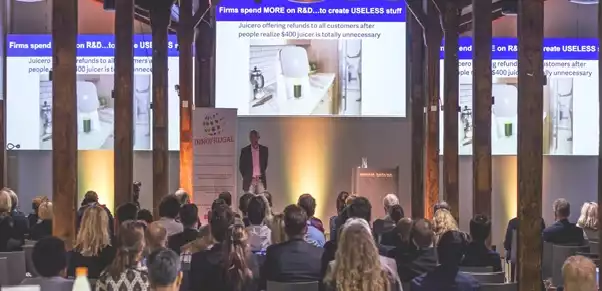
- The prevailing approach in European firms is on cutting edge technology development that is geared towards expensive solutions. On the other hand, current European frugal inspired products are driven by altruistic motivation. The ingenuity is about combining and mobilizing for frugal innovations. For example: using open innovation models that already exist in Europe or finding technologies that can constitute relevant platforms for the design of future frugal solutions.
- The challenges are also visible: Even though clear trends point towards greater demand for frugal solutions in Europe, customers are still hesitant about choosing frugal solutions due to the negative image associated with “buying affordably”. Other challenges include previous failures by smaller firms in launching some types of technology-based frugal solutions.
- The recommendations include: Public sector demand could be an initial trigger where frugal projects should aim not only at achieving low prices but on proven quality and limited environmental footprint.
Make something people want
This sentence became the motto of Y-Combinator seed accelerator particularly adapted to Nordic companies going to developing countries and trying to sell their products and services. To make them winners, in addition to effective marketing, the product or service should be affordable, functional, good quality, and accessible.
Not a code word for cheap or outsourcing
Frugal innovation is not a code word for cheap or outsourcing. It is about learning how to innovate under resource constraints and turn adversity into growth opportunities by delivering solutions that can be termed “affordable excellence.” Of course, this is not easy and that is where the challenge can bring out the human ingenuity.
To mainstream frugal innovation thinking and get individuals and organizations to change their mindsets & add new skillsets; we started our non-profit, The Nordic Frugal Innovation Society, in December 2013. We are pursuing activities such as training, workshops and especially our annual conference InnoFrugal. It will be held in Helsinki for the 4th time from May 7-8, 2018 along with other editions in UK (InnoFrugal UK - March 27, 2018) and USA (InnoFrugal USA - Date TBC in 2018).
Is your business ready to take the next step - to innovate and create sustainable economic growth that leads to reduced inequalities - while also helping realize sustainable United Nations’ development goals?
Please join our frugal innovation community on OPEN!